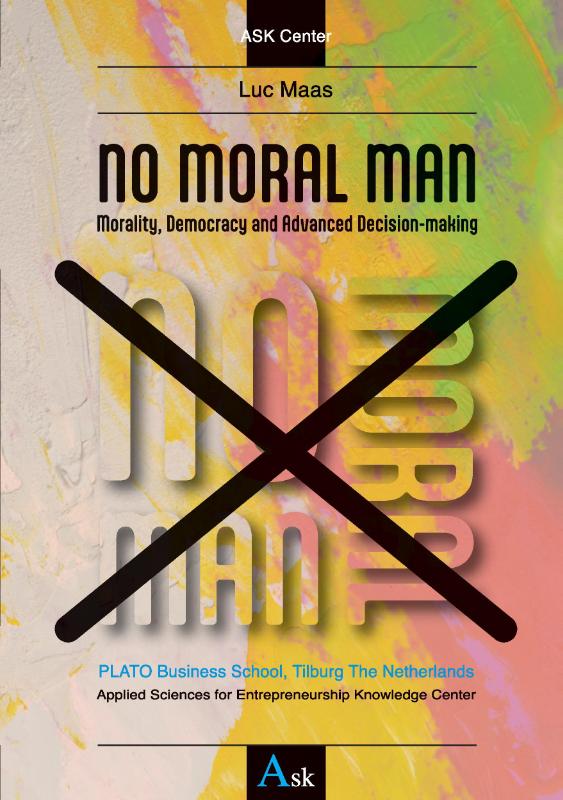
No Moral Man Morality, Democracy and Advanced Decision-making
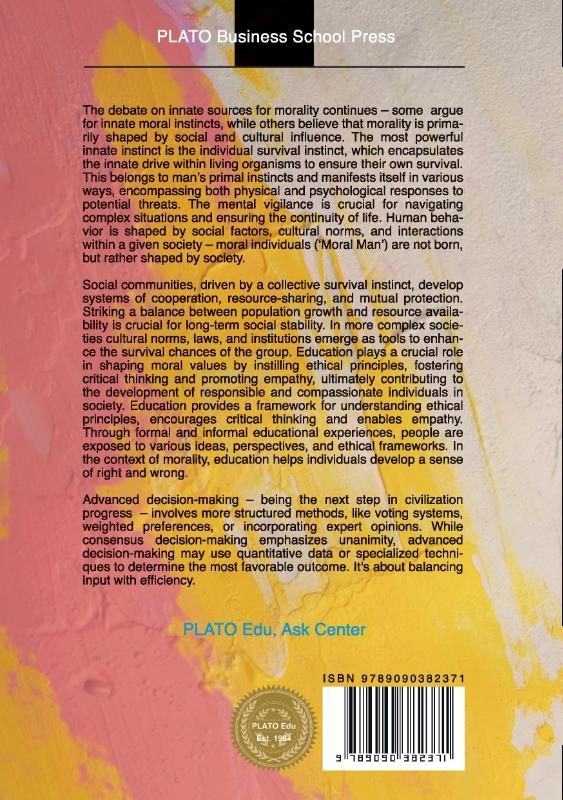
The debate on innate sources for morality continues – some argue for innate moral instincts, while others believe that morality is primarily shaped by social and cultural influence. The most powerful innate instinct is the individual survival instinct, which encapsulates the innate drive within living organisms to ensure their own survival. This belongs to man’s primal instincts and manifests itself in various ways, encompassing both physical and psychological responses to potential threats. The mental vigilance is crucial for navigating complex situations and ensuring the continuity of life. Human behavior is shaped by social factors, cultural norms, and interactions within a given society – moral individuals (‘Moral Man’) are not born, but rather shaped by society.Social communities, driven by a collective survival instinct, develop systems of cooperation, resource-sharing, and mutual protection. Striking a balance between population growth and resource availability is crucial for long-term social stability. In more complex societies cultural norms, laws, and institutions emerge as tools to enhance the survival chances of the group. Education plays a crucial role in shaping moral values by instilling ethical principles, fostering critical thinking and promoting empathy, ultimately contributing to the development of responsible and compassionate individuals in society. Education provides a framework for understanding ethical principles, encourages critical thinking and enables empathy. Through formal and informal educational experiences, people are exposed to various ideas, perspectives, and ethical frameworks. In the context of morality, education helps individuals develop a sense of right and wrong.Advanced decision-making – being the next step in civilization progress – involves more structured methods, like voting systems, weighted preferences, or incorporating expert opinions. While consensus decision-making emphasizes unanimity, advanced decision-making may use quantitative data or specialized techniques to determine the most favorable outcome. It's about balancing input with efficiency.
In het kort
ISBN-13
9789090382371
Uitgever
Verschenen
25 februari 2024
Serie
Bibliografisch
Uitgave
UitgeverPLATO Edu ASK Center
CB-relatie-id6482440
Verschenen25 februari 2024
StatusLeverbaar 04
BeschikbaarheidBeschikbaar 20
Adviesprijs (incl. btw)€ 22,95
Vorm & inhoud
ProductvormPaperback BC
SamenstellingLos product
Classificatie
NUR (hoofd)Cultuurfilosofie 736
NUR (alle)736 Cultuurfilosofie
Medewerkers
Auteur A01Luc Maas
Herkomst
Werk-id (NSTC)501578970
MeldingBevestigd bij publicatie 03
Bijgewerkt6 augustus 2026
Lijkt op dit boek



NSTC 501578970 · CB-relatie 6482440 · Bijgewerkt 6 augustus 2026