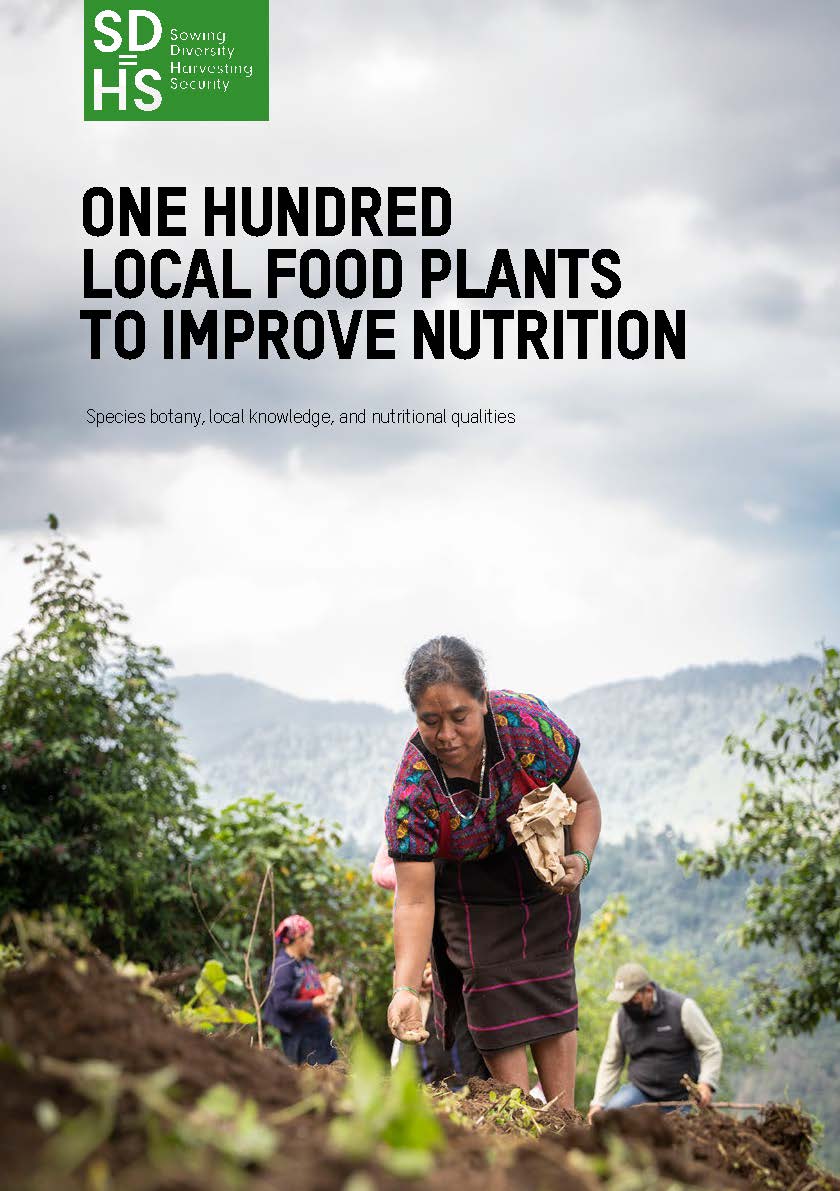
One hundred local food plants to improve nutrition Species botany, local knowledge, and nutritional qualities
E-book265 pagina’sEngelsLeverbaar
FOREWORDCOLOPHONWHY THIS BOOKList of speciesSorted alphabeticallySorted by continentACRONYMS 1 IMPROVING NUTRITION WITH LOCAL FOOD PLANTS1.1 MALNUTRITION AROUND THE WORLDMicronutrient deficienciesNutrition during food scarcity1.2 WHY LOCAL FOOD PLANTS?What are local food plants?Definition of neglected and underutilized species (NUS)A gendered approach1.3 PROGRAMME SITES WHERE LOCAL FOOD PLANTS WERE IDENTIFIED2 UNDERSTANDING LOCAL FOOD PLANTS2.1 PLANT NAMES2.2 BOTANICAL INFORMATION2.3 ETHNOBOTANICAL INFORMATION2.4 NUTRITIONAL INFORMATION2.5 CONTROVERSIES RELATED TO SPECIES LOCALITYWidely used local food plantsRecognition by local communitiesGeographical distribution2.6 FURTHER CONSIDERATIONS ON POTENTIAL TOXICITY AND HYGIENEPotential toxicity of food itemsThe importance of hygiene3 SPECIES DESCRIPTION4 REFLECTIONS AND RECOMMENDATIONS4.1 SOME REFLECTIONS ON THE SPECIES4.2 PROMOTING CHAMPION SPECIES4.3 IMPLICATIONS FOR POLICY AND DECISION MAKING5 ACKNOWLEDGEMENTS6 REFERENCES6.1 References per species, sorted6.2 References for the other chaptersAPPENDIX 1. METHODOLOGYHousehold surveySelection and characterization of plants for this bookNutritional analysisThis book will become the best friend for those who are keen to improve their nutrition, and help others to do that, with the consumption of local food plant biodiversity.Malnutrition is the leading cause of death and ill health worldwide, and in particular in developing countries. At the same time, multiple experiences from around the world have documented how Indigenous peoples and smallholder farmers ensure their food and nutrition security by using edible plants growing in their surroundings. Several local food plants, in particular neglected and underutilized species, are very rich in particular nutrients that might be absent from the staple crops in the diet, most notably cereals and legumes. Plant biodiversity certainly holds the key to address malnutrition, while helping to reduce food scarcity. However, it is often poorly recognized that a portfolio of local food plants is (potentially) available for the diet to diversify the food and nutrient sources of the family. Among the hundred plants presented in this book, we highlighted some champion species. We name champions those food plants that can play an essential role in addressing micronutrient deficiencies, given their high contents of particular nutrients. Moreover, we named champions those food plants that are available during food scarcity periods, as well as some highly nutritious species that are available throughout the year.The list of hundred local food plants was built based on the information provided by Indigenous peoples and smallholder farmers in the regions in Zimbabwe, Uganda, Zambia, Laos, Nepal, Peru and Guatemala where the work on Local Food Plants for Nutrition of the Oxfam Sowing Diversity = Harvesting Security (SD=HS) program was implemented. The implementing partners in these countries were the National Agricultural and Forestry Research Institute (NAFRI) and the Agricultural Research Center (ARC) in Laos, the Local Initiatives for Biodiversity, Research and Development (Li Bird) in Nepal, the Asociación de Organizaciones de los Cuchumatanes (ASOCUCH) in Guatemala, the Participatory Ecological Land Use Management (PELUM) and the Eastern and Southern Africa Small Scale Farmers’ Forum (ESAFF) in Uganda, the Community Technology Development Trust (CTDT) in Zambia and Zimbabwe, and the Fomento de la Vida (FOVIDA) in Peru. The objective of this book is to describe the botany, local knowledge and nutritional qualities of one hundred local food plants, which can help reduce the length of the food scarcity period and micronutrient deficiencies of Indigenous peoples and smallholder farmers across Africa, Asia and Latin America. The book also explains the species’ tolerance to conditions of environmental stress, which suggests the potential role they might play for nutrition in the context of climate change.
In het kort
ISBN-13
9789069421384
Uitgever
Verschenen
1 december 2023
Imprint
Druk
1
Bibliografisch
ISBN-139789069421384
Editie1
Druk1
TaalEngels eng
Pagina’s265
GeïllustreerdJa
Uitgave
UitgeverOxfam Novib Uitgeverij
ImprintOxfam Novib
CB-relatie-id8186180
Verschenen1 december 2023
StatusLeverbaar 04
BeschikbaarheidBeschikbaar 20
Zonder prijsPrijs volgt
Vorm & inhoud
ProductvormE-book ED
VormdetailE107 PDF
SamenstellingLos product
Beveiliging e-bookGeen 00
Classificatie
Medewerkers
Auteur A01Gisella S. Cruz-Garcia
Auteur A01Konstantina Maria Togka
Auteur A01Hilton Mbozi
Auteur A01Bert Visser
Illustrator A12Jasper Van Grunsven
Herkomst
Werk-id (NSTC)501567265
MeldingBevestigd bij publicatie 03
Bijgewerkt6 augustus 2026
Trefwoorden
Lijkt op dit boek










NSTC 501567265 · CB-relatie 8186180 · Bijgewerkt 6 augustus 2026