
Pietro Pomponazzi and the Renaissance Theory of the Elements A Study with Editions of Unpublished Texts
PrefaceAcknowledgmentsList of AbbreviationsPart One – EssayI Historical background1. The elements from antiquity to the Middle Ages1.1 Introduction1.2 Aristotle on elements and mixtures1.3 Towards the medieval debate: intellectuals and methods2. Four main theories of the elements in the Middle Ages2.1 Alexander of Aphrodisias2.2 Avicenna2.3 Averroes2.4 The Common Opinion3. The status quaestionis on the elements at the turn of fifteenth and sixteenth centuryII Pietro Pomponazzi on the elements1. Stages of Pomponazzi’s teaching on the elements2. Pomponazzi’s reconstruction of the medieval debate3. The interpretation of Avicenna3.1 Exposition and sources3.2 Pomponazzi vs Avicenna4. The interpretation of Averroes and the Averroists4.1 Exposition and sources4.2 Pomponazzi vs Averroes4.3 The comparison with Averroes in the single quaestio (T.6)4.4 Concluding remarks5. The Common Opinion5.1 Exposition and sources5.2 Pomponazzi vs the Common Opinion5.3 Final remarks on the Common Opinion6. Pomponazzi on the elements6.1 The mixing process and the genesis of mixtures6.2 Pomponazzi’s sources6.3 Solution of the aporias of the Common Opinion6.4 Classification of mixtures6.5 Final conjectures on mixtures6.6 An overall judgementIII Philological and stylistic aspects of the Edition1. The present edition: texts and copyists2. Recensio codicum3. Descriptio codicum3.1 Text 1 (Winter 1520/21)3.2 Texts 2–3 (Winter 1521/22)3.3 Text 4 (November 1523)3.4 Text 5 (April 1525)3.5 Text 6 (uncertain date)4. Stylistic aspects of Pomponazzi’s lectures4.1 In between a commentary and a treatise4.2 Structure of the quaestiones4.3 Teaching devices5. The Critical EditionsPart two – TextsI. Text 1 – Excerpts from the lecture on De coelo IIIII. Text 2 – Excerpts from the lecture on De generatione et corruptione IIII. Text 3 – Excerpts from the lecture on De generatione et corruptione IIIV. Text 4 – Excerpts from the lecture on Meteora IVV. Text 5 – Excerpts from the lecture on De sensu et sensatoVI Text 6 – Quaestio de remanentia elementorum in mixtoMajor dates in the life of Pietro PomponazziBibliographyIndexesFirst ever editions of texts on the elements from Pomponazzi’s lectures on De coelo, De sensu, Meteorologica and De generatione et corruptione.In medieval and early modern natural philosophy, very few issues were as controversial as the nature of the elements. From the thirteenth up until the sixteenth century, European thinkers discussed this problem with growing interest. Defining the nature of the elements was key to deciphering the very structure of the universe and the essence of things. Along with five primary texts, here edited for the first time, this book discusses one of the most original contributions to this debate, that of Renaissance philosopher Pietro Pomponazzi (d. 1525). Pomponazzi’s account, developed in university lectures, holds significance for two reasons. First, it provides a thorough description of the most influential doctrines on the elements presented by medieval scholars, opening a window onto three hundred years of prior discussions on the topic. Second, Pomponazzi also develops his own views on the issue, explicitly defining them as ‘heretical’ to emphasise his departure from all opinions expressed before him.In medieval and early modern natural philosophy, very few issues were as controversial as the nature of the elements. From the thirteenth up until the sixteenth century, European thinkers discussed this problem with growing interest. Defining the nature of the elements was key to deciphering the very structure of the universe and the essence of things. Along with five primary texts, here edited for the first time, this book discusses one of the most original contributions to this debate, that of Renaissance philosopher Pietro Pomponazzi (d. 1525). Pomponazzi’s account, developed in university lectures, holds significance for two reasons. First, it provides a thorough description of the most influential doctrines on the elements presented by medieval scholars, opening a window onto three hundred years of prior discussions on the topic. Second, Pomponazzi also develops his own views on the issue, explicitly defining them as ‘heretical’ to emphasise his departure from all opinions expressed before him.
In het kort
ISBN-13
9789462704152
Uitgever
Verschenen
15 juli 2024
Imprint
Bibliografisch
ISBN-139789462704152
SerieAncient and Medieval Philosophy - Series 1 — deel 1
Editie1
TaalEngels eng
Pagina’s335
GeïllustreerdNee
Uitgave
UitgeverUniversitaire Pers Leuven
ImprintLeuven University Press
CB-relatie-id8004161
Verschenen15 juli 2024
StatusAangekondigd 02
BeschikbaarheidContact leverancier 99
Adviesprijs (incl. btw)€ 85,00
Vorm & inhoud
ProductvormHardback BB
SamenstellingLos product
Classificatie
NUR (hoofd)Geschiedenis van de filosofie 732
NUR (alle)732 Geschiedenis van de filosofie
Trefwoordenmatter · elements · hylomorphism · aristotelianism · primary qualities · substantial forms · pietro pomponazzi · renaissance universities · latin averroism
Medewerkers
Auteur A01Luca Burzelli
Herkomst
MeldingBevestigd bij publicatie 03
Bijgewerkt6 augustus 2026
Trefwoorden
Lijkt op dit boek
Geletterde geesten - tweede editie
Petri Thomae Quaestiones de formis
Petri Thomae Quaestiones de formis
Orality and Scribal Culture in the High Middle Ages
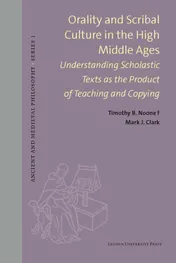
Orality and Scribal Culture in the High Middle Ages
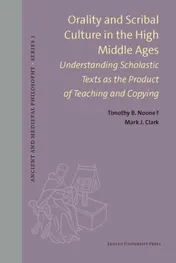
Orality and Scribal Culture in the High Middle Ages
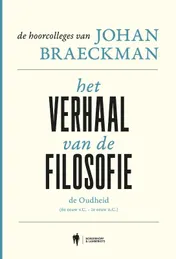
Het verhaal van de filosofie: de Oudheid

Summa (Quaestiones ordinariae) art. LXXIII - LXXV

Summa (Quaestiones ordinariae) art. LXXIII - LXXV
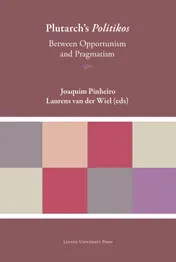
Plutarch’s 'Politikos'
CB-relatie 8004161 · Bijgewerkt 6 augustus 2026