
Solar Geometry in Performance of the Built Environment An Integrated Computational Design Method for High-Performance Building Massing Based on Attribute Point Cloud Information
Paperback180 pagina’sEngels
As part of the passive design strategy, the development of computational solar envelopes plays a major role to construct a cooperative environmental performance exchange between new buildings and their local contexts. However, the state-of-the-art computational solar envelopes pose a great challenge in understanding site characteristics from a given context. Existing methods predominantly construct 3D context models based on basic architectural geometric shapes, which are often isolated from the surrounding properties of local contexts (i.e., vegetation, materials). Thus, they only focus on context-oriented buildings and energy quantities that unfortunately lack a contextual solar performance analysis. It is clear that this condition may result in a fragmented understanding of the local context during the design and simulation process.With the potential application of attribute point cloud information, it is necessary to consider relevant parameters such as surface and material properties of existing contexts during the simulation of solar geometries, which are currently absent in computational frameworks. As such, the new method is required to enable architects not only to measure specific performances of the local context but also to identify vulnerable areas that may affect the proposed design. This research focuses on exploring an integrated computational design method for solar geometry based on solar and shading envelopes, and geometric and radiometric information from point cloud data. In particular, two computational models consisting of SOLEN (Subtractive Solar Envelopes) and SHADEN (Subtractive Shading Envelopes) are developed, which are applied to temperate and tropical climates, respectively. In design practice, these models help architects to produce informed-design decisions towards high-performed building massing.
In het kort
ISBN-13
9789463664219
Uitgever
Verschenen
13 mei 2021
Imprint
Bibliografisch
ISBN-139789463664219
Editie1
TaalEngels eng
Pagina’s180
GeïllustreerdJa
Uitgave
Vorm & inhoud
ProductvormPaperback BC
SamenstellingLos product
Classificatie
NUR (hoofd)Bouwkunde 955
NUR (alle)955 Bouwkunde
Medewerkers
Auteur A01Miktha Farid Alkadri
Herkomst
Werk-id (NSTC)501464578
MeldingBevestigd bij publicatie 03
Bijgewerkt6 augustus 2026
Lijkt op dit boek
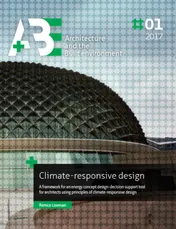
Climate-responsive design
Urban form influence on microclimate and building cooling demand
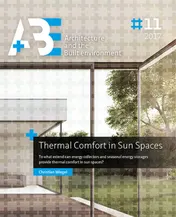
Thermal comfort in sun spaces
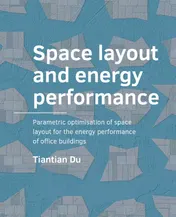
Space Layout and Energy Performance

Design as Exploration

Facade refurbishment toolbox

Physiomimetic Façade Design

Space Design for Thermal Comfort and Energy Efficiency in Summer
Modelling Daylight for Existing Indoor Spaces

Designing the urban microclimate
NSTC 501464578 · CB-relatie 6225289 · Bijgewerkt 6 augustus 2026