
The Clear Line in Comics and Cinema A Transmedial Approach
AcknowledgementsIntroductionPart One: Clear Line ComicsOpening remarksChapter 1: Hergé’s clear lineFrom Totor to Tintin: Trace and narrative as constraintsThe clear line finds its Oriental historyThe clear line facing new formatsChapter 2: The clear line of the École de BruxellesEdgar P. Jacobs’s naturalist clear lineBetween individuality and standardisation: Jacques Martin, Bob De Moor and Roger LeloupChapter 3: The clear line after Tintin et les PicarosThe postmodernist clear line: From Tante Leny presenteert! to (À Suivre)The neoclassical clear line: From Professor Palmboom to Blake and Mortimer 2.0Philip, Francis and friends: Contemporary parodies and pastiches of the clear lineClosing remarksPart Two: Clear Line CinemaOpening remarksChapter 4: Cinema as a graphic-verbal mediumFilm’s media combination: A theoretical perspectiveFilm’s media combination: An analytical perspectiveFilm’s media combination: A stylistic perspectiveChapter 5: Clear line cinema“Dire juste”: Density, simplicity and stylisation in cinemaA few directions for a history of clear line cinema, from Louis Lumière to Wes AndersonClosing remarksPart Three: Case StudiesOpening remarks 153Chapter 6: Yasujirô OzuOzu’s clear line frame composition and storytelling strategiesRed teapot, yellow teacup: Clear line colouring in Ozu’s late filmsChapter 7: Jacques TatiThis fits here, that fits there: The clear line in the Hulot comediesMinimal sounds for maximal effects: Remarks on Tati’s clear line soundscapesChapter 8: Frank TashlinTashlin’s clear line ink: Comics, advertisements and animationThe clear line at the service of comedy in Tashlin’s feature filmsClosing remarksFor a transmedial use of the concept of “clear line”: A conclusionSourcesNotesHistorical and theoretical analysis of the “clear line” style in comics and cinemaThe "clear line", a term coined in 1977 by Dutch essayist and artist Joost Swarte, has become shorthand in the field of comics studies for the style originally developed by Hergé and the École de Bruxelles. It refers to certain storytelling strategies that generate a deceptively simple, lucid and hygienic narration: in Philippe Marion's words, it is a style "made out of light, fluidity and limpid clarity".By cataloguing and critically analysing clear line comics from historical and theoretical perspectives, this book offers a new outlook on the development of the style in the 20th and 21st centuries, especially focused on the context of the European bande dessinée. In addition, it pioneeringly expands the concept of "clear line" to other artistic domains by introducing and defending its transmedial use, which is particularly relevant for the understanding of the oeuvres of certain filmmakers of the 20th century working in the postwar period, such as Yasujirô Ozu in Japan, Jacques Tati in France and Frank Tashlin in the United States. The Clear Line in Comics and Cinema is therefore a key theoretical work for both bande dessinée enthusiasts and comics scholars, as well as a fundamental contribution to present-day film studies and transmedial narratology.The “clear line”, a term coined in 1977 by Dutch essayist and artist Joost Swarte, has become shorthand in the field of comics studies for the style originally developed by Hergé and the École de Bruxelles. It refers to certain storytelling strategies that generate a deceptively simple, lucid and hygienic narration: in Philippe Marion’s words, it is a style “made out of light, fluidity and limpid clarity”.By cataloguing and critically analysing clear line comics from historical and theoretical perspectives, this book offers a new outlook on the development of the style in the 20th and 21st centuries, especially focused on the context of the European bande dessinée. In addition, it pioneeringly expands the concept of “clear line” to other artistic domains by introducing and defending its transmedial use, which is particularly relevant for the understanding of the oeuvres of certain filmmakers of the 20th century working in the postwar period, such as Yasujirô Ozu in Japan, Jacques Tati in France and Frank Tashlin in the United States. The Clear Line in Comics and Cinema is therefore a key theoretical work for both bande dessinée enthusiasts and comics scholars, as well as a fundamental contribution to present-day film studies and transmedial narratology.
In het kort
ISBN-13
9789461664433
Uitgever
Verschenen
15 mei 2022
Imprint
Bibliografisch
ISBN-139789461664433
SerieStudies in European Comics and Graphic Novels — deel 10
Editie1
TaalEngels eng
Pagina’s267
GeïllustreerdJa
Uitgave
UitgeverUniversitaire Pers Leuven
ImprintLeuven University Press
CB-relatie-id8004161
Verschenen15 mei 2022
StatusInactief 08
BeschikbaarheidContact leverancier 99
Adviesprijs (incl. btw)€ 45,00
Vorm & inhoud
ProductvormE-book ED
VormdetailE107 PDF
SamenstellingLos product
Beveiliging e-bookGeen 00
Classificatie
NUR (hoofd)Literatuurwetenschap 617
NUR (alle)617 Literatuurwetenschap
Trefwoordencinema · comics · transmediality · simplicity · 20th century · hergé · yasujirô ozu · jacques tati · frank tashlin · clear line
Herkomst
MeldingBevestigd bij publicatie 03
Bijgewerkt6 augustus 2026
Trefwoorden
Lijkt op dit boek
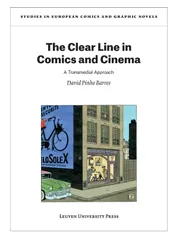
The Clear Line in Comics and Cinema
The Belgian Photonovel, 1954-1985
The Visionary Art of Franco-Belgian Comics, 1930s to 1960s
What happens when nothing happens
The History of Japanese Animation
Comics of the New Europe
The History of the Cartoon
Sfar so far
Recharting Territories
Postcolonialism and Migration in French Comics
CB-relatie 8004161 · Bijgewerkt 6 augustus 2026