
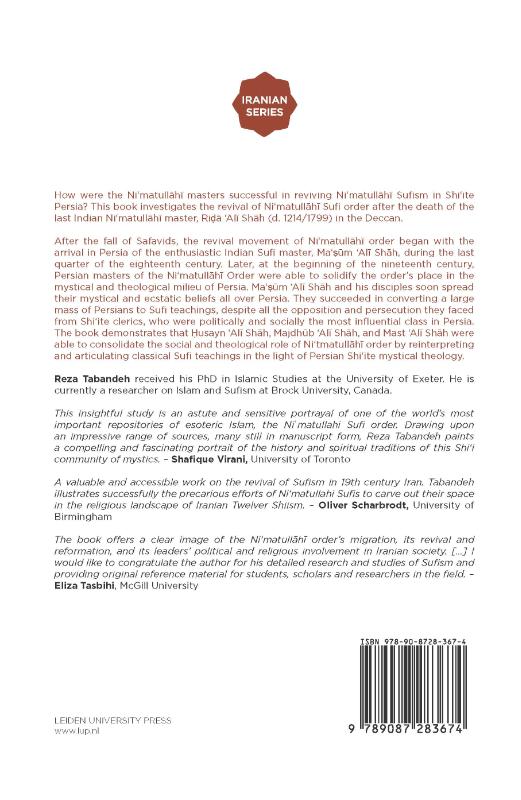
The Rise of the Ni‘matullāhī Order Shi'ite Sufi Masters against Islamic Fundamentalism in 19th-Century Persia
How were the Ni‘matullāhī masters successful in reviving Ni‘matullāhī Sufism in Shi‘ite Persia? This book investigates the revival of Ni‘matullāhī Sufi order after the death of the last Indian Ni‘matullāhī master, Riḍā ‘Alī Shāh (d. 1214/1799) in the Deccan.
After the fall of Safavids, the revival movement of the Ni‘matullāhī order began with the arrival in Persia of the enthusiastic Indian Sufi master, Ma‘ṣūm ‘Alī Shāh, during the last quarter of the eighteenth century. Later, at the beginning of the nineteenth century, Persian masters of the Ni‘matullāhī Order were able to solidify the order’s place in the mystical and theological milieu of Persia. Ma‘ṣūm ‘Alī Shāh and his disciples soon spread their mystical and ecstatic beliefs all over Persia. They succeeded in converting a large mass of Persians to Sufi teachings, despite the opposition and persecution they faced from Shi‘ite clerics, who were politically and socially the most influential class in Persia. The book demonstrates that Ḥusayn ‘Alī Shāh, Majdhūb ‘Alī Shāh, and Mast ‘Alī Shāh were able to consolidate the social and theological role of the Ni‘matullāhī order by reinterpreting and articulating classical Sufi teachings in the light of Persian Shi‘ite mystical theology.
Reza Tabandeh received his PhD in Islamic Studies at the University of Exeter. He is currently a researcher on Islam and Sufism at Brock University, Canada.
This insightful study is an astute and sensitive portrayal of one of the world’s most important repositories of esoteric Islam, the Niʿmatullahi Sufi order. Drawing upon an impressive range of sources, many still in manuscript form, Reza Tabandeh paints a compelling and fascinating portrait of the history and spiritual traditions of this Shiʿi community of mystics.
Shafique Virani, University of Toronto
A valuable and accessible work on the revival of Sufism in 19th century Iran. Tabandeh illustrates successfully the precarious efforts of Ni‘matullahi Sufis to carve out their space in the religious landscape of Iranian Twelver Shiism.
Oliver Scharbrodt, University of Birmingham
The book offers a clear image of the Ni‘matullāhī order’s migration, its revival and reformation, and its leaders’ political and religious involvement in Iranian society. […] I would like to congratulate the author for his detailed research and studies of Sufism and providing original reference material for students, scholars and researchers in the field.
Eliza Tasbihi, McGill University
After the fall of Safavids, the revival movement of the Ni‘matullāhī order began with the arrival in Persia of the enthusiastic Indian Sufi master, Ma‘ṣūm ‘Alī Shāh, during the last quarter of the eighteenth century. Later, at the beginning of the nineteenth century, Persian masters of the Ni‘matullāhī Order were able to solidify the order’s place in the mystical and theological milieu of Persia. Ma‘ṣūm ‘Alī Shāh and his disciples soon spread their mystical and ecstatic beliefs all over Persia. They succeeded in converting a large mass of Persians to Sufi teachings, despite the opposition and persecution they faced from Shi‘ite clerics, who were politically and socially the most influential class in Persia. The book demonstrates that Ḥusayn ‘Alī Shāh, Majdhūb ‘Alī Shāh, and Mast ‘Alī Shāh were able to consolidate the social and theological role of the Ni‘matullāhī order by reinterpreting and articulating classical Sufi teachings in the light of Persian Shi‘ite mystical theology.
Reza Tabandeh received his PhD in Islamic Studies at the University of Exeter. He is currently a researcher on Islam and Sufism at Brock University, Canada.
This insightful study is an astute and sensitive portrayal of one of the world’s most important repositories of esoteric Islam, the Niʿmatullahi Sufi order. Drawing upon an impressive range of sources, many still in manuscript form, Reza Tabandeh paints a compelling and fascinating portrait of the history and spiritual traditions of this Shiʿi community of mystics.
Shafique Virani, University of Toronto
A valuable and accessible work on the revival of Sufism in 19th century Iran. Tabandeh illustrates successfully the precarious efforts of Ni‘matullahi Sufis to carve out their space in the religious landscape of Iranian Twelver Shiism.
Oliver Scharbrodt, University of Birmingham
The book offers a clear image of the Ni‘matullāhī order’s migration, its revival and reformation, and its leaders’ political and religious involvement in Iranian society. […] I would like to congratulate the author for his detailed research and studies of Sufism and providing original reference material for students, scholars and researchers in the field.
Eliza Tasbihi, McGill University
In het kort
ISBN-13
9789087283674
Uitgever
Verschenen
22 juni 2021
Imprint
Bibliografisch
Uitgave
UitgeverLeiden University Press
ImprintLeiden University Press
CB-relatie-id6345163
Verschenen22 juni 2021
StatusOnbekend 00
Vorm & inhoud
ProductvormPaperback BC
SamenstellingLos product
Classificatie
Medewerkers
Auteur A01Reza Tabandeh
Herkomst
Werk-id (NSTC)501469145
MeldingBevestigd bij publicatie 03
Laatste CB-bericht7766
Bijgewerkt5 augustus 2026
Lijkt op dit boek
Ayatollah Khomeini’s Mystical Poetry and its Reception in Iran and the Diaspora
All About Sufism
Pearls of Meanings
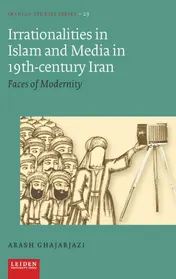
Irrationalities in Islam and Media in 19th-Century Iran
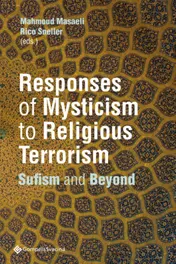
Responses of Mysticism to Religious Terrorism
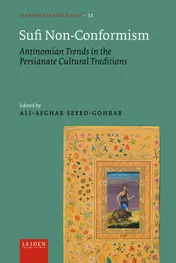
Sufi Non-Conformism
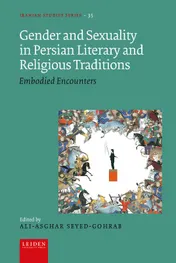
Gender and Sexuality in Persian Literary and Religious Traditions
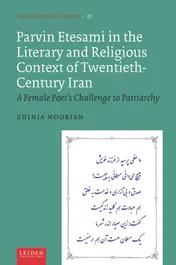
Parvin Etesami in the Literary and Religious Context of Twentieth-Century Iran
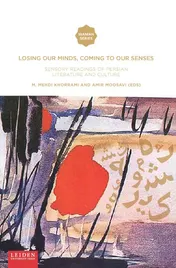
Losing Our Minds, Coming to Our Senses
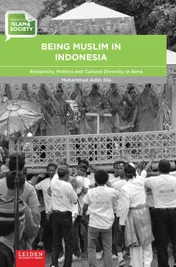
Being Muslim in Indonesia
NSTC 501469145 · CB-relatie 6345163 · Laatste CB-bericht 7766 · Bijgewerkt 5 augustus 2026