
The terrorist attacks at the start of the 21st century catapulted the issue of space and conflict into the forefront of architectural debates. As a result, existing and newly emerging national, religious and ethnic conflicts in relation to urban space became the focus of attention in architecture. Though military thinking had already had a long-standing tradition in architectural history, the sudden emergence of new spaces of conflict considerably altered architectural discourse. Extreme conditions of war, militarisation, climate change as well as economic crisis are threatening to structurally reconfigure our living environments. Over a decade later, however, the aftermath of these urban intrusions seems to have produced a diversified field of both thinking and action in architecture, as the theorising of spatial conflicts has started to incorporate a wide variety of reflections from other disciplines while architectural practices have shown a remarkable adequacy in addressing spaces of conflict, crisis and disaster.The forthcoming 19th issue of Footprint will focus on these more recent roles of architecture in the contemporary spaces of conflict. In this issue, departing from a spatial understanding of geopolitical, climatological and economical conflicts, we seek to introduce and add to the professional discourse new conditions, spaces and experimental practices. Focusing on 'conflict', we are interested in contributions that highlight the large scale and phenomenal transitions in the physical world and in society by extrapolating, through examples, the abundance of relations that can be traced between conflict, territory and architecture.In addition to this focus on the spatial consequences of conflict, we would be interested in clarifying the intrinsic relationships that can be traced between theory and practice. Conflict areas often prove to be fertile grounds for innovation and for the emergence of new spatial forms. In their extremity, conflicts often serve as an intensified example for spatial processes that happen elsewhere, both in our cities, territories and landscapes. The ongoing condition of crisis has allowed for the emergence of all sorts of speculative scenarios, and simultaneously given rise to the emergence of new discursive takes on spaces of resilience.
In het kort
ISBN-13
9789490322724
Uitgever
Verschenen
11 november 2016
Serie
Footprint 19
Imprint
Bibliografisch
ISBN-139789490322724
SerieFootprint 19
Editie1
TaalEngels eng
GeïllustreerdJa
Uitgave
UitgeverJap Sam Books
ImprintJap Sam Books
CB-relatie-id7014444
Verschenen11 november 2016
StatusOnbekend 00
Vorm & inhoud
ProductvormPaperback BC
SamenstellingLos product
Classificatie
NUR (hoofd)Bouwkunst, architectuur 648
NUR (alle)648 Bouwkunst, architectuur
Medewerkers
Redacteur B01Malkit Shoshan
Redacteur B01Marc Schoonderbeek
Herkomst
Werk-id (NSTC)500076686
MeldingBevestigd bij publicatie 03
Bijgewerkt6 augustus 2026
Lijkt op dit boek
Vol 9/2 The 'bread & butter'of architecture: investigating everyday practices
Mediating the Spatiality of Conflicts
Conflict Mediations
spring/summer 2017
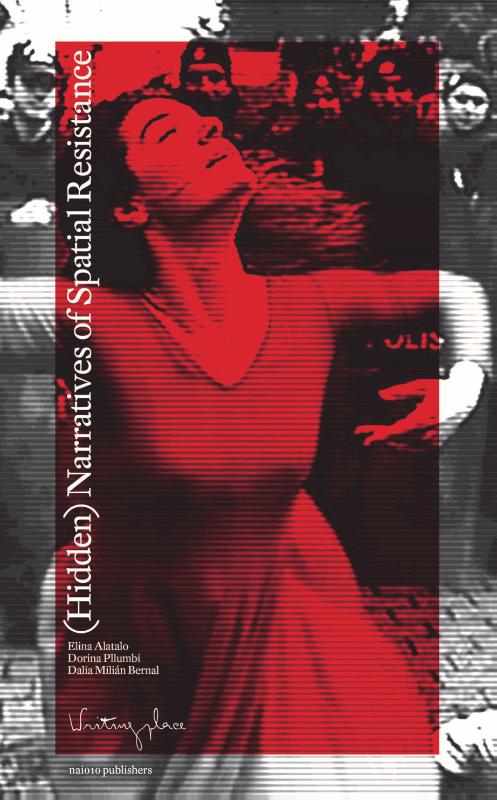
(Hidden) Narratives of Spatial Resistance
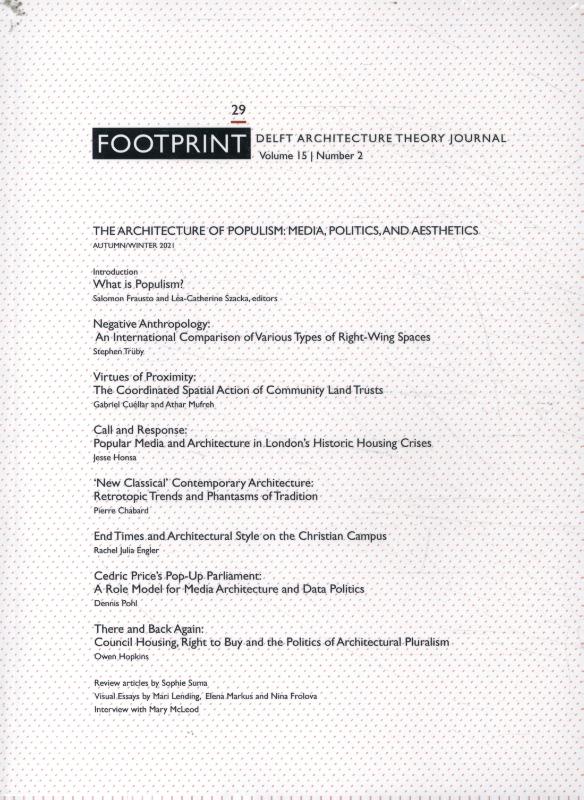
The Architecture of Populism
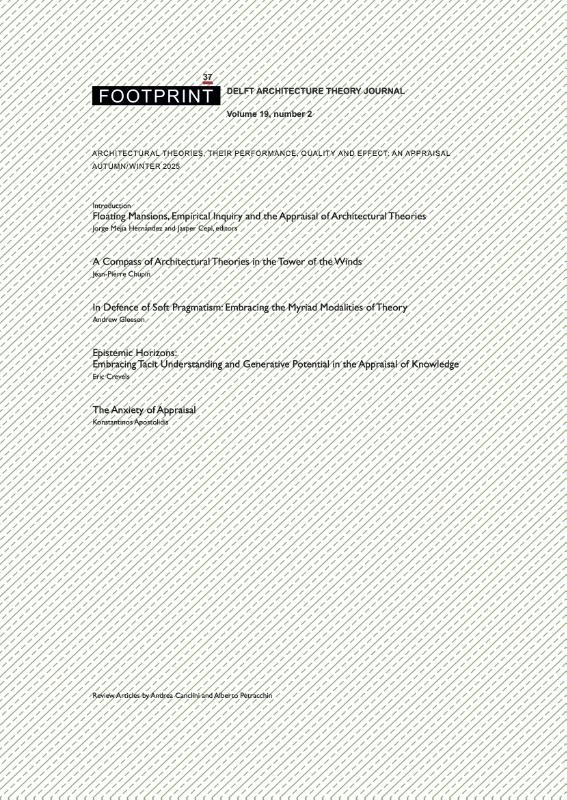
Footprint 37 Architectural Theories, their Performance, Quality and Effect: An Appraisal
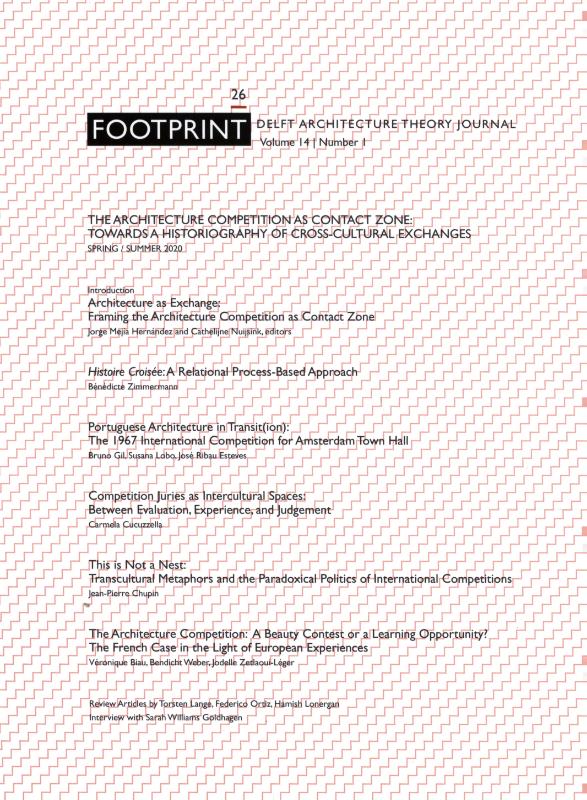
Footprint 26. The Architecture Competition as ‘Contact Zone
States of Emergency
Footprint 28
NSTC 500076686 · CB-relatie 7014444 · Bijgewerkt 6 augustus 2026