
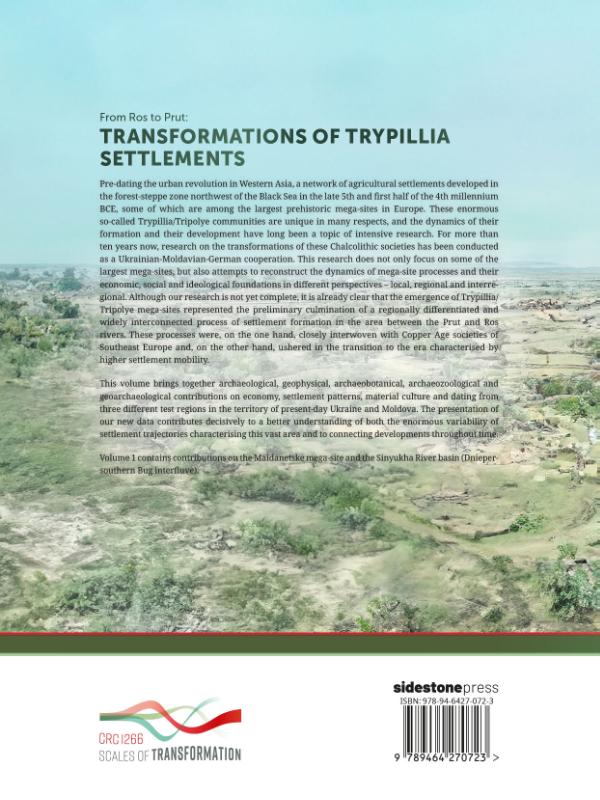
From Ros to Prut Transformations of Trypillia settlements (volume 1)
Wiebke Kirleis bewerker · Johannes Müller bewerker · Vitalii Rud bewerker · Stanislav Ţerna bewerker · Mykhailo Videiko bewerker
TRYPILLIA RESEARCH DECOLONISATION1. Modern Trypillia Transformation research: decolonising by new research concepts, methods and resultsJohannes MüllerMAIDANESTSKE AND SINYUKHA REGION (REGION A)2. Report on the fieldwork of 2016 in the Trypillia mega-settlement Maidanetske: Investigations on the development and internal structuringRobert Hofmann, Johannes Müller, Wiebke Kirleis, Michail Videiko, Hans-Rudolf Bork, René Ohlrau, Natalia Burdo, Liudmyla Shatilo, Vitalii Rud, Stefan Dreibrodt, Knut Rassmann, Masha Videiko3. Geophysical Investigations at MaidanetskeNatalie Pickartz, Tina Wunderlich, Erica Corradini, Knut Rassmann, Dennis Wilken, Wolfgang Rabbel4. Geoarchaeological analyses on daub pieces from Maidanets`ke- A treatises to reconstruct burning temperatures of houses and daub processingStefan Dreibrodt, Sarah Martini, Robert Hofmann, Marta Dal Corso, Wiebke Kirleis, Johannes Müller5. The geoarchaeological record of the Chalcolithic Trypillian mega-settlement Maidanetske, central UkraineStefan Dreibrodt, Sarah Martini, Robert Hofmann, Marta Dal Corso, Wiebke Kirleis, Johannes Müller6. Is that all there is? The worked osseous materials from the site of MaidanetskeAndrea Ţerna7. Plant economy and local environment at the Trypillia mega-site Maidanetske after botanical macro-remainsMarta Dal Corso, Wiebke Kirleis8. X-Ray micro computer tomography (XRay-µCT) as a fast noninvasive technique for compositional studies of burned prehistorical materials- Results and implications from burned daub at Maidanetske, central UkraineStefan Dreibrodt, Christopher Heilmann, Marta Dal Corso, Pia Bodden, Robert Hofmann, Michail Videiko, Johannes Müller, Wiebke Kirleis, Astrid Holzheid9. Archaeozoological and taphonomic examinations carried out on faunal remains from Ukrainian-German excavations at Maidanetske from 2013 to 2016Norbert Benecke, Robert Hofmann, Michail Videiko, Johannes Müller10. The contribution of Chalcolithic terrestrial snail shells from Maidanetske to environmental reconstructionFrank Schlütz, Marta Dal Corso, Wiebke Kirleis11. Before Talyanok: large Trypilian sites built before the largest mega-settlements in the Sinyukha basinRobert Hofmann, Liudmyla Shatilo12. What was the significance of small Trypillia settlements? Report on a test excavation in Moshuriv 1, Sinyucha river basin, UkraineRobert Hofmann, Liudmyla Shatilo, Michailo Yu. Videiko13. Trypillia mega-sites vicinity: the chronology of several small sites of the Southern Buh left bank regionMykhailo Videiko, Vitalii Rud, Robert Hofmann, Vladyslav ChabaniukPre-dating the urban revolution in Western Asia, a network of agricultural settlements developed in the forest-steppe zone northwest of the Black Sea in the late 5th and first half of the 4th millennium BCE, some of which are among the largest prehistoric mega-sites in Europe. These enormous so-called Trypillia communities are unique in many respects, and the dynamics of their formation and their development have long been a topic of intensive research. For more than ten years now, research on the transformations of these Chalcolithic societies has been conducted as a Ukrainian-Moldavian-German cooperation. This research does not only focus on some of the largest mega-sites, but also attempts to reconstruct the dynamics of mega-site processes and their economic, social and ideological foundations in different perspectives – local, regional and interregional. Although our research is not yet complete, it is already clear that the emergence of Trypillia mega-sites represented the preliminary culmination of a regionally differentiated and widely interconnected process of settlement formation in the area between the Prut and Ros rivers. These processes were, on the one hand, closely interwoven with Copper Age societies of Southeast Europe and, on the other hand, ushered in the transition to the era characterised by higher settlement mobility.This volume brings together archaeological, geophysical, archaeobotanical, archaeozoological and geoarchaeological contributions on economy, settlement patterns, material culture and dating from three different test regions in the territory of present-day Ukraine and Moldova. The presentation of our new data contributes decisively to a better understanding of both the enormous variability of settlement trajectories characterising this vast area and to connecting developments throughout time.Volume 1 contains contributions on the Maidanetske mega-site and the Sinyukha River basin (Dnieper-southern Bug interfluve).
In het kort
ISBN-13
9789464270730
Uitgever
Verschenen
28 maart 2024
Imprint
Bibliografisch
ISBN-139789464270730
SerieScales of Transformation — deel 19
Editie1
TaalEngels eng
Pagina’s360
GeïllustreerdJa
Uitgave
UitgeverSidestone Press
ImprintSidestone Press Academics
CB-relatie-id9180064
Verschenen28 maart 2024
StatusOnbekend 00
Vorm & inhoud
ProductvormHardback BB
SamenstellingLos product
Classificatie
NUR (hoofd)Archeologie 682
NUR (alle)682 Archeologie
Medewerkers
Bewerker B05Robert Hofmann
Bewerker B05Wiebke Kirleis
Bewerker B05Johannes Müller
Bewerker B05Vitalii Rud
Bewerker B05Stanislav Ţerna
Bewerker B05Mykhailo Videiko
Herkomst
Werk-id (NSTC)501556601
MeldingBevestigd bij publicatie 03
Bijgewerkt6 augustus 2026
Lijkt op dit boek
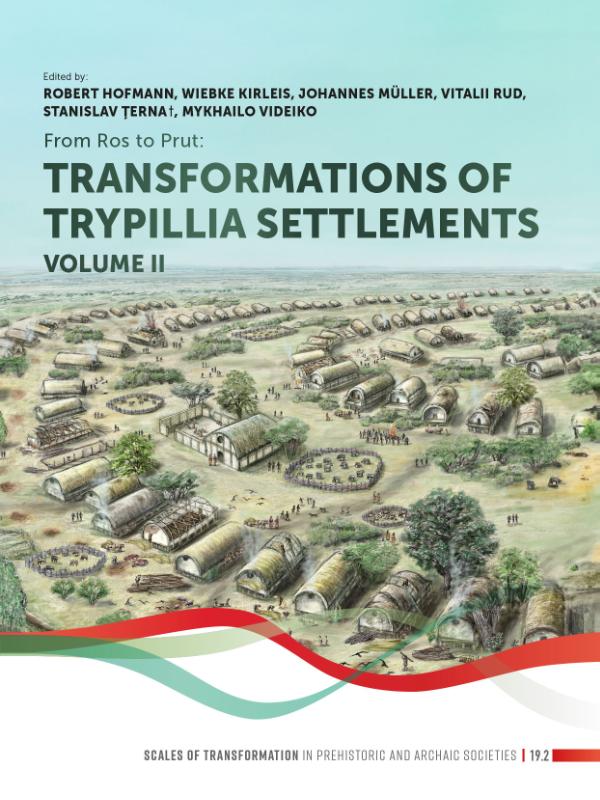
From Ros to Prut
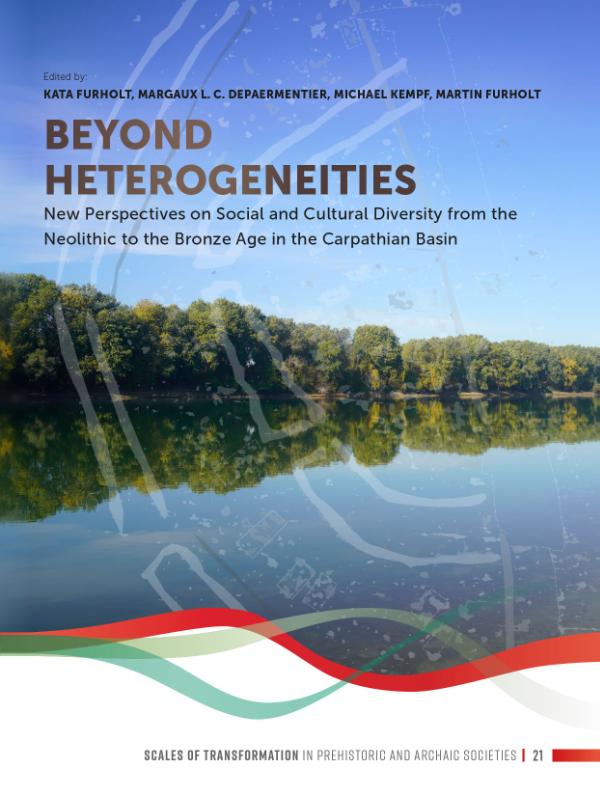
Beyond heterogeneities
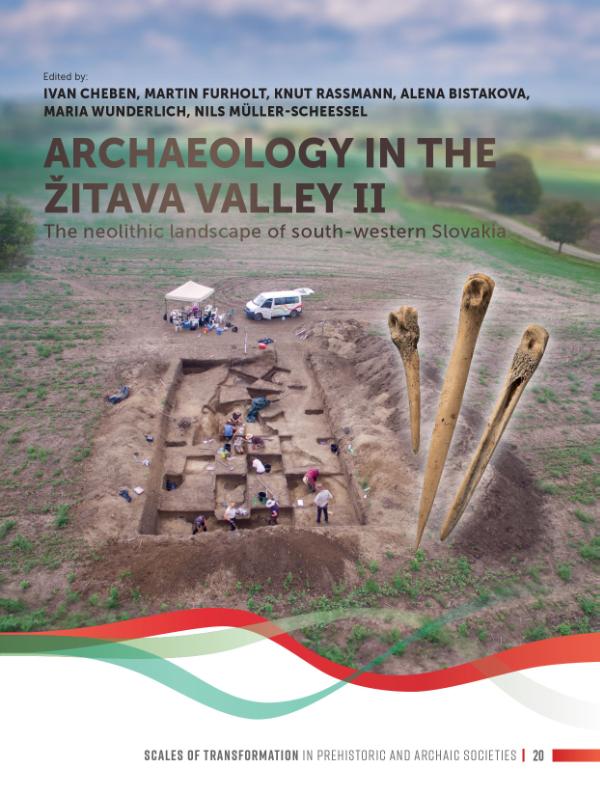
Archaeology in the Žitava valley II
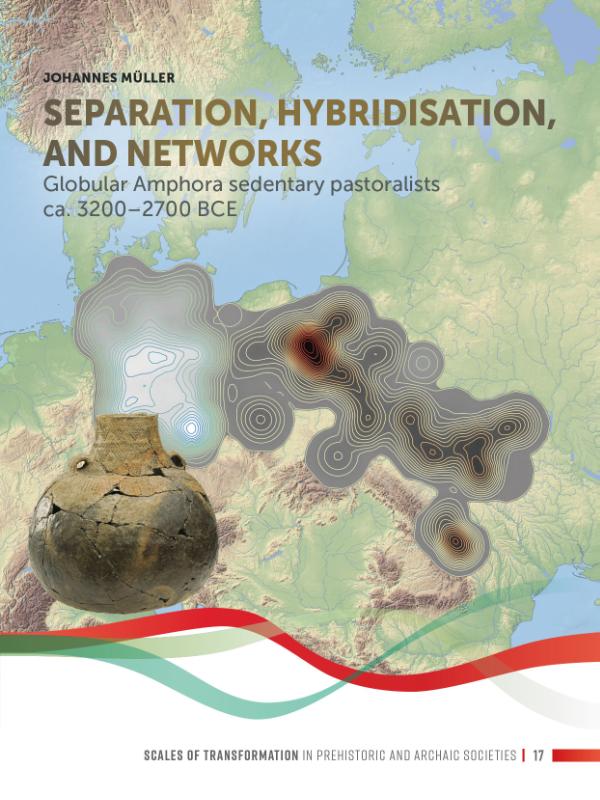
Separation, hybridisation, and networks
The eve of destruction?
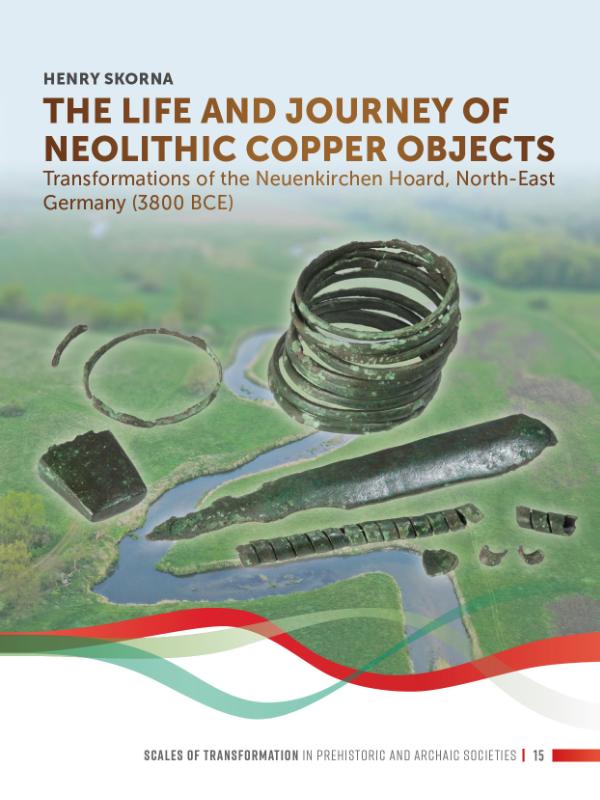
The Life and Journey of Neolithic Copper Objects
Coming together, keeping apart: Volume 1
Population dynamics and land-use patterns in the southwestern Baltic region during the Neolithic and the Bronze Age
Coming together, keeping apart: Volume 2
The Cultural Context of Ceramics from Neolithic Mariupol-Type Cemeteries
NSTC 501556601 · CB-relatie 9180064 · Bijgewerkt 6 augustus 2026