
Towards a new policy direction for an improved housing delivery system in Nigerian cities Theoretical, Empirical and Comparative Perspectives
In Nigeria, housing units are not adequate for the entire population, especially in cities (Anosike et al. 2011, Makinde 2014). For instance, the deficit grows at an alarming rate, from about 8 million in 1991 to over 16 million in 2000s (Aribigbola, 2000; Aribigbola and Ayeniyo 2012). The challenges of housing provision are not only quantitative but also qualitative and have to be dealt with in a dual institutional perspective: the formal and the informal sector (Makinde, 2014; National Population Census, NPC, 2006). How can the Nigerian housing provision be improved and what are the new roles that policy can play to address the housing shortages in Nigerian cities?Several researchers have examined the subject of housing in Nigeria and confirmed the existence of shortages. Some have also attempted to advocate that there are challenges without giving an appropriate policy way forward. Also, most of the existing studies are not based on appropriate theoretical underpinnings. Therefore, this thesis contains a diagnosis of the housing problems in Nigeria, based on the nature of the housing provision systems (formal and informal) and a framework for possible policy solution(s), using theoretical, empirical and comparative approaches. Emphasis was placed on the theoretical and empirical perspectives, while an insight was gained into possible solutions adopted in some selected countries through a synthesis of extant studies. To capture the actual contexts of housing challenges, six objectives raised in the form of research questions were pursued. In the first objective, the Nigerian housing situations were examined in the contexts of political, economic and demographic developments in order to identify the nature of the housing shortages. Findings from the first objective indicated that housing shortages in Nigerian cities are both quantitative and qualitative in nature. The major problems were found in the informal sector because the formal sector is not accessible due to changes in government administration, the low income condition and institutional barriers. It was found that the decline in the formal provision resulted in the growth of the informal provision.
In het kort
ISBN-13
9789463660679
Uitgever
Verschenen
4 september 2018
Imprint
Bibliografisch
ISBN-139789463660679
Editie1
TaalEngels eng
Pagina’s342
GeïllustreerdJa
Uitgave
UitgeverTU Delft Open
ImprintTU Delft Open
CB-relatie-id6225289
Verschenen4 september 2018
StatusOnbekend 00
Vorm & inhoud
ProductvormPaperback BC
SamenstellingLos product
Classificatie
NUR (hoofd)Bouwkunst, architectuur 648
NUR (alle)648 Bouwkunst, architectuur
Medewerkers
Auteur A01Job Taiwo Gbadegesin
Herkomst
Werk-id (NSTC)500362935
MeldingBevestigd bij publicatie 03
Bijgewerkt6 augustus 2026
Lijkt op dit boek
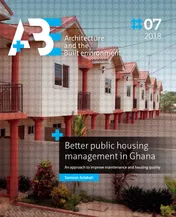
Better public housing management in Ghana
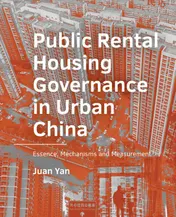
Public Rental Housing Governance in Urban China
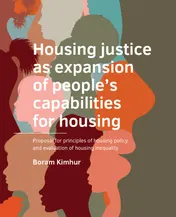
Housing justice as expansion of people’s capabilities for housing
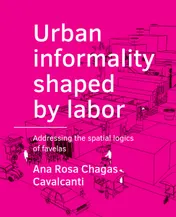
Urban informality shaped by labor
African New Towns
Towards an Architecture of Self-reliance

flexZhouse
Towards a Better-Functioning Private Rented Sector in Metropolitan China
Cities for or against citizens?
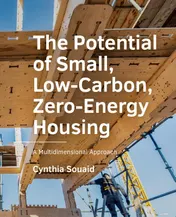
The Potential of Small, Low-Carbon, Zero-Energy Housing
NSTC 500362935 · CB-relatie 6225289 · Bijgewerkt 6 augustus 2026