Mijn boeken
Catalogus
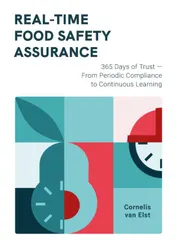
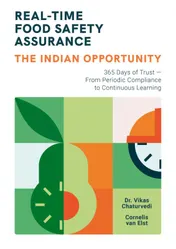
Omslag van Real-Time Food Safety Assurance - the Indian opportunity
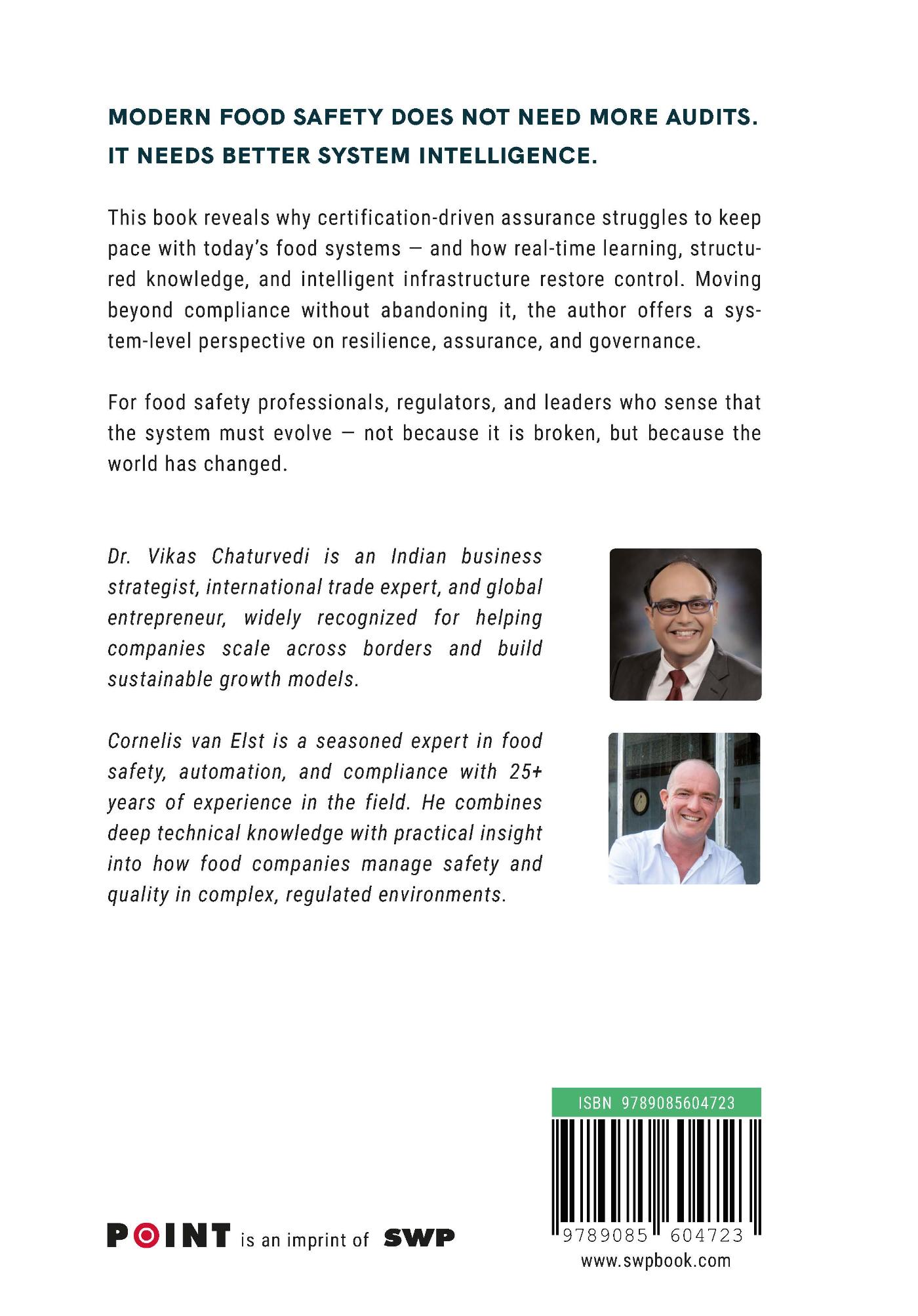
Achterkant van Real-Time Food Safety Assurance - the Indian opportunity

Real-Time Food Safety Assurance - the Indian opportunity 365 Days of Trust — From Periodic Compliance to Continuous Learning

E-book190 pagina’sEngels
Ook verkrijgbaar als
Preface — India Edition 9 About the Author — Ir. Cornelis van Elst 11 About the Co-Author — Dr. Vikas Chaturvedi 13 Executive Summary 15 Who This Book Is For 19 Overview of the Book 21 Part I How CertIfICatIon BeCame tHe CeIlIng 1. Chasing the Highest Certificate Keeps Companies in Phase 1 29 2. Certification Keeps Companies Stuck in Phase 1 (Because the System Does) 33 3. The Big TIC Phase-1 Trap 37 4. Why Passing Audits Does Not Mean an Organization Is in Control 40 5. Phase 1 Is Necessary — Remaining There Is the Risk 43 Part II food Safety aS a learnIng SyStem 6. Food Safety as a Knowledge-Intensive Function 49 7. Food Safety as a Learning Organization 52 8. Managing the Five Food Safety Knowledge Domains 55 9. Why Knowledge — Not Documentation — Determines Maturity 58 10. From Individual Expertise to Organizational Intelligence 60 11. The Question Every Leadership Team Should Ask 62Part III Beyond PdCa: SenSe & reSPond 12. PDCA Was Designed for a Slower World 67 13. From PDCA to Sense & Respond 70 14. Why PDCA Costs Become Distorted in the Big TIC Model 73 15. Real-Time Assurance Restores Balance 76 Part IV tHe CollaPSe of dePendenCy modelS 16. Why the Traditional Consultant Model in Food Safety Is Breaking Down 81 17. Stop Paying €1,300 a Day for Dependency 84 18. Good Auditors in a System That Constrains Learning 87 19. The New Audit Reality That Remains Largely Unspoken 90 20. Real-Time Assurance Is Not Anti-Audit 93 Part V InfraStruCture, SoVereIgnty, and g2B modelS 21. From Paper Compliance to Live Assurance 99 22. Real-Time Food Safety Assurance Is No Longer a Vision 103 23. Who Owns the Knowledge Domains Owns the Infrastructure 106 24. Sovereign Real-Time Food Safety Is Ready for G2B Programs 109 25. From €60k to €4k — Why G2B Changes Everything 112 26. Why Emerging Economies Should Skip the Audit Era 115 Part VI aI and SyStem IntellIgenCe 27. AI Will Not Fix Food Safety Without a Knowledge Backbone 121 28. How AI Supervision Becomes Possible 124Part VII Power, eConomICS, and tHe way forward 29. Why Private Equity Is Attracted to Phase-1 Models 129 30. Why Food Safety Needs Infrastructure — Not Roll-Ups 132 31. We Do Not Need More Certificates — We Need System Intelligence 135 Part VIII – IndIa Beyond SuPPly: rePoSItIonIng IndIa In euroPe’S food eConomy 32. India in a Recalibrating Global Food System 141 33. Decoding the Export Dissonance 143 34. The Three Structural Shifts 145 35. MSMEs: Built Small, Competing Global 147 Closing Note — An Epilogue 149 Appendix 1 151 Appendix 2 155 Appendix 3 157 Appendix 4 162 Appendix 5 170 Appendix 6 174 Appendix 7 178 Appendix 8 182MODERN FOOD SAFETY DOES NOT NEED MORE AUDITS.IT NEEDS BETTER SYSTEM INTELLIGENCE.
This book reveals why certification-driven assurance struggles to keep pace with today’s food systems — and how real-time learning, structured knowledge, and intelligent infrastructure restore control. Moving beyond compliance without abandoning it, the author offers a system-level perspective on resilience, assurance, and governance.

Beyond Supply: Repositioning India in Europe’s Food Economy

Discussions of food safety are typically centered on rules, standards, audits, and certificates. These elements define how assurance is organized and communicated.They are important, but also incomplete.In the context of India’s agri-food system—with its scale, diversity, and strong MSME base—this becomes especially visible. Many assurance models function as designed, yet struggle to keep pace with increasing complexity, global trade demands, and rising expectations from international markets.

The result is not failure, but strain. Producers, exporters, auditors, and regulators all work harder within systems that still prioritize periodic proof over continuous understanding.

This book does not argue against standards or certification. It assumes professionalismand good intent across the system.Its purpose is different.

The chapters that follow explore food safety as a learning system—one that builds intelligence, adapts to complexity, and enables continuous assurance across fragmented supply networks.

They ask:

– How can India move from volume to value in European markets?

– How can MSMEs become drivers of precision and differentiation?

– What does assurance look like when it operates continuously, not episodically?

The perspective is grounded in practice and real-world system behavior. The intention is not to replace existing models, but to complete them.

Compliance provides structure.

Learning provides adaptability.

Assurance becomes credible when both are designed together.

Real-Time Food Safety Assurance

For India, this is a strategic opportunity.

The transformation ahead is not about doing more.

It is about learning better.


Dr. Vikas Chaturvedi is an Indian business strategist, international trade expert, and globalentrepreneur, widely recognized for helping companies scale across borders and buildsustainable growth models.
Cornelis van Elst is a seasoned expert in food safety, automation, and compliance with 25+years of experience in the field. He combines deep technical knowledge with practical insightinto how food companies manage safety and quality in complex, regulated environments.MODERN FOOD SAFETY DOES NOT NEED MORE AUDITS. IT NEEDS BETTER SYSTEM INTELLIGENCE. This book reveals why certification-driven assurance struggles to keep pace with today's food systems — and how real-time learning, structured knowledge, and intelligent infrastructure restore control. Moving beyond compliance without abandoning it, the author offers a system-level perspective on resilience, assurance, and governance. Beyond Supply: Repositioning India in Europe's Food Economy Discussions of food safety are typically centered on rules, standards, audits, and certificates. These elements define how assurance is organized and communicated.They are important, but also incomplete. In the context of India's agri-food system—with its scale, diversity, and strong MSME base—this becomes especially visible. Many assurance models function as designed, yet struggle to keep pace with increasing complexity, global trade demands, and rising expectations from international markets. The result is not failure, but strain. Producers, exporters, auditors, and regulators all work harder within systems that still prioritize periodic proof over continuous understanding. This book does not argue against standards or certification. It assumes professionalismand good intent across the system.Its purpose is different. The chapters that follow explore food safety as a learning system—one that builds intelligence, adapts to complexity, and enables continuous assurance across fragmented supply networks. They ask: – How can India move from volume to value in European markets?– How can MSMEs become drivers of precision and differentiation?– What does assurance look like when it operates continuously, not episodically? The perspective is grounded in practice and real-world system behavior. The intention is not to replace existing models, but to complete them. Compliance provides structure. Learning provides adaptability. Assurance becomes credible when both are designed together. Real-Time Food Safety Assurance For India, this is a strategic opportunity. The transformation ahead is not about doing more. It is about learning better. Dr. Vikas Chaturvedi is an Indian business strategist, international trade expert, and global entrepreneur, widely recognized for helping companies scale across borders and build sustainable growth models. Cornelis van Elst is a seasoned expert in food safety, automation, and compliance with 25+ years of experience in the field. He combines deep technical knowledge with practical insight into how food companies manage safety and quality in complex, regulated environments.

In het kort
ISBN-13
9789461540799
Verschenen
15 mei 2026
Imprint
Druk
1

Lijkt op dit boek

NSTC 501672166 · CB-relatie 7800937 · Bijgewerkt 6 augustus 2026
Bestel bij bol →
← Terug naar resultaten
Omslag van Real-Time Food Safety Assurance - the Indian opportunity
Achterkant van Real-Time Food Safety Assurance - the Indian opportunity

Real-Time Food Safety Assurance - the Indian opportunity

365 Days of Trust — From Periodic Compliance to Continuous Learning
E-book190 pagina’sEngels
Bestel bij bol →
Ook verkrijgbaar als
Preface — India Edition 9 About the Author — Ir. Cornelis van Elst 11 About the Co-Author — Dr. Vikas Chaturvedi 13 Executive Summary 15 Who This Book Is For 19 Overview of the Book 21 Part I How CertIfICatIon BeCame tHe CeIlIng 1. Chasing the Highest Certificate Keeps Companies in Phase 1 29 2. Certification Keeps Companies Stuck in Phase 1 (Because the System Does) 33 3. The Big TIC Phase-1 Trap 37 4. Why Passing Audits Does Not Mean an Organization Is in Control 40 5. Phase 1 Is Necessary — Remaining There Is the Risk 43 Part II food Safety aS a learnIng SyStem 6. Food Safety as a Knowledge-Intensive Function 49 7. Food Safety as a Learning Organization 52 8. Managing the Five Food Safety Knowledge Domains 55 9. Why Knowledge — Not Documentation — Determines Maturity 58 10. From Individual Expertise to Organizational Intelligence 60 11. The Question Every Leadership Team Should Ask 62Part III Beyond PdCa: SenSe & reSPond 12. PDCA Was Designed for a Slower World 67 13. From PDCA to Sense & Respond 70 14. Why PDCA Costs Become Distorted in the Big TIC Model 73 15. Real-Time Assurance Restores Balance 76 Part IV tHe CollaPSe of dePendenCy modelS 16. Why the Traditional Consultant Model in Food Safety Is Breaking Down 81 17. Stop Paying €1,300 a Day for Dependency 84 18. Good Auditors in a System That Constrains Learning 87 19. The New Audit Reality That Remains Largely Unspoken 90 20. Real-Time Assurance Is Not Anti-Audit 93 Part V InfraStruCture, SoVereIgnty, and g2B modelS 21. From Paper Compliance to Live Assurance 99 22. Real-Time Food Safety Assurance Is No Longer a Vision 103 23. Who Owns the Knowledge Domains Owns the Infrastructure 106 24. Sovereign Real-Time Food Safety Is Ready for G2B Programs 109 25. From €60k to €4k — Why G2B Changes Everything 112 26. Why Emerging Economies Should Skip the Audit Era 115 Part VI aI and SyStem IntellIgenCe 27. AI Will Not Fix Food Safety Without a Knowledge Backbone 121 28. How AI Supervision Becomes Possible 124Part VII Power, eConomICS, and tHe way forward 29. Why Private Equity Is Attracted to Phase-1 Models 129 30. Why Food Safety Needs Infrastructure — Not Roll-Ups 132 31. We Do Not Need More Certificates — We Need System Intelligence 135 Part VIII – IndIa Beyond SuPPly: rePoSItIonIng IndIa In euroPe’S food eConomy 32. India in a Recalibrating Global Food System 141 33. Decoding the Export Dissonance 143 34. The Three Structural Shifts 145 35. MSMEs: Built Small, Competing Global 147 Closing Note — An Epilogue 149 Appendix 1 151 Appendix 2 155 Appendix 3 157 Appendix 4 162 Appendix 5 170 Appendix 6 174 Appendix 7 178 Appendix 8 182MODERN FOOD SAFETY DOES NOT NEED MORE AUDITS.IT NEEDS BETTER SYSTEM INTELLIGENCE.
This book reveals why certification-driven assurance struggles to keep pace with today’s food systems — and how real-time learning, structured knowledge, and intelligent infrastructure restore control. Moving beyond compliance without abandoning it, the author offers a system-level perspective on resilience, assurance, and governance.

Beyond Supply: Repositioning India in Europe’s Food Economy

Discussions of food safety are typically centered on rules, standards, audits, and certificates. These elements define how assurance is organized and communicated.They are important, but also incomplete.In the context of India’s agri-food system—with its scale, diversity, and strong MSME base—this becomes especially visible. Many assurance models function as designed, yet struggle to keep pace with increasing complexity, global trade demands, and rising expectations from international markets.

The result is not failure, but strain. Producers, exporters, auditors, and regulators all work harder within systems that still prioritize periodic proof over continuous understanding.

This book does not argue against standards or certification. It assumes professionalismand good intent across the system.Its purpose is different.

The chapters that follow explore food safety as a learning system—one that builds intelligence, adapts to complexity, and enables continuous assurance across fragmented supply networks.

They ask:

– How can India move from volume to value in European markets?

– How can MSMEs become drivers of precision and differentiation?

– What does assurance look like when it operates continuously, not episodically?

The perspective is grounded in practice and real-world system behavior. The intention is not to replace existing models, but to complete them.

Compliance provides structure.

Learning provides adaptability.

Assurance becomes credible when both are designed together.

Real-Time Food Safety Assurance

For India, this is a strategic opportunity.

The transformation ahead is not about doing more.

It is about learning better.


Dr. Vikas Chaturvedi is an Indian business strategist, international trade expert, and globalentrepreneur, widely recognized for helping companies scale across borders and buildsustainable growth models.
Cornelis van Elst is a seasoned expert in food safety, automation, and compliance with 25+years of experience in the field. He combines deep technical knowledge with practical insightinto how food companies manage safety and quality in complex, regulated environments.MODERN FOOD SAFETY DOES NOT NEED MORE AUDITS. IT NEEDS BETTER SYSTEM INTELLIGENCE. This book reveals why certification-driven assurance struggles to keep pace with today's food systems — and how real-time learning, structured knowledge, and intelligent infrastructure restore control. Moving beyond compliance without abandoning it, the author offers a system-level perspective on resilience, assurance, and governance. Beyond Supply: Repositioning India in Europe's Food Economy Discussions of food safety are typically centered on rules, standards, audits, and certificates. These elements define how assurance is organized and communicated.They are important, but also incomplete. In the context of India's agri-food system—with its scale, diversity, and strong MSME base—this becomes especially visible. Many assurance models function as designed, yet struggle to keep pace with increasing complexity, global trade demands, and rising expectations from international markets. The result is not failure, but strain. Producers, exporters, auditors, and regulators all work harder within systems that still prioritize periodic proof over continuous understanding. This book does not argue against standards or certification. It assumes professionalismand good intent across the system.Its purpose is different. The chapters that follow explore food safety as a learning system—one that builds intelligence, adapts to complexity, and enables continuous assurance across fragmented supply networks. They ask: – How can India move from volume to value in European markets?– How can MSMEs become drivers of precision and differentiation?– What does assurance look like when it operates continuously, not episodically? The perspective is grounded in practice and real-world system behavior. The intention is not to replace existing models, but to complete them. Compliance provides structure. Learning provides adaptability. Assurance becomes credible when both are designed together. Real-Time Food Safety Assurance For India, this is a strategic opportunity. The transformation ahead is not about doing more. It is about learning better. Dr. Vikas Chaturvedi is an Indian business strategist, international trade expert, and global entrepreneur, widely recognized for helping companies scale across borders and build sustainable growth models. Cornelis van Elst is a seasoned expert in food safety, automation, and compliance with 25+ years of experience in the field. He combines deep technical knowledge with practical insight into how food companies manage safety and quality in complex, regulated environments.

In het kort
ISBN-13
9789461540799
Verschenen
15 mei 2026
Imprint
Druk
1

Lijkt op dit boek

Alles bekijken →
NSTC 501672166 · CB-relatie 7800937 · Bijgewerkt 6 augustus 2026