
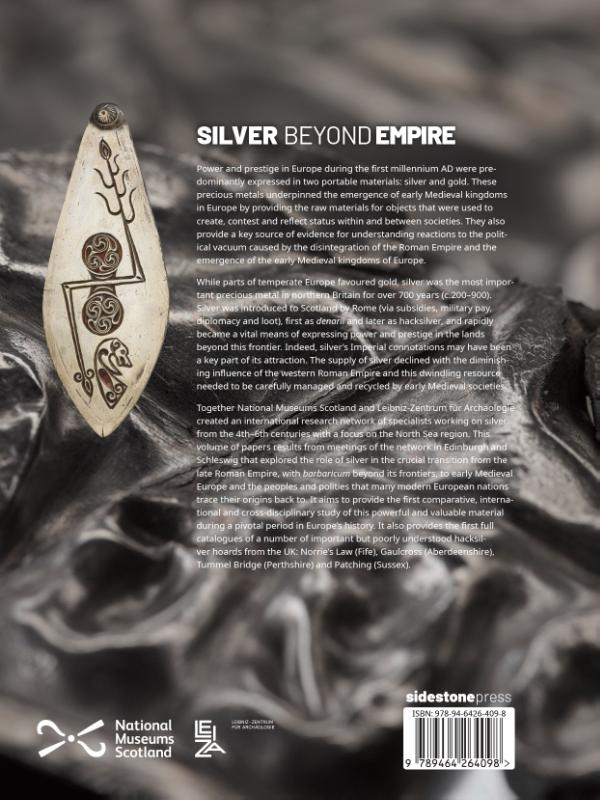
Silver beyond Empire The transition between late Roman and early medieval Europe
Paperback750 pagina’sEngels
Chapter 1. The circulation of Roman silver in the 4th and 5th centuries around and across the frontierFraser HunterChapter 2. Silver for the Soldiers: quantifying the use and absence of silver among the limitanei of the dux BritanniarumRob CollinsChapter 3. Hacksilver hoarding and silver use in 5th/6th-century ScotlandAlice Blackwell & Martin GoldbergChapter 4. Silver in the societies of Roman Iron Age and Migration Period Scandinavia – with a focus on hacksilver of the 4th–6th centuriesAndreas RauChapter 5. Denarii in late Roman and Migration Period hoardsAleksander Bursche & Kyrylo MyzginChapter 6. Silver in the Merovingian realm: a post-monetary economy between the late Roman and the Carolingian EmpireDieter QuastChapter 7. Hacksilver in late Antiquity, the Merovingian period and Slavic times. Structural similarities or continuity?Matthias HardtChapter 8. Object biographies of silver objects in the Quoit Brooch Style of south-east Britain: manufacture, use and reuseEllen SwiftChapter 9. Patching, West Sussex: the nature of the hacksilver and the date of the hoardFraser Hunter & Andreas RauChapter 10. The early medieval hacksilver hoard from Wem, ShropshireRoger H. White, Richard Hobbs & Richard AbdyChapter 11. Scotland’s silver spiral rings in contextJenna MartinChapter 12. A reconsideration of silver handpinsSusan YoungsChapter 13. Hillquarter and the Norrie’s Law and Gaulcross mounts: saddle or shield?Joanna Close-BrooksChapter 14. The siliquae from Gaulcross and Norrie’s Law in contextRichard AbdyChapter 15. The scientific examination and analysis of the Gaulcross and Norrie’s Law silver hoardsLore Troalen, Janet Lang & Jim TateChapter 16. Silver-working at the Craw Stane complex, Rhynie in north-east ScotlandGemma Cruickshanks & Gordon NobleCatalogue 1: The Norrie’s Law hoard, Fife, ScotlandAlice Blackwell & Fraser Hunter, with Richard Abdy & Martin GoldbergConcordance between Catalogue numbers and museum numbers for the Norrie’s Law hoardCatalogue 2: The Gaulcross hoard, Aberdeenshire, ScotlandAlice Blackwell & Fraser Hunter, with Richard AbdyConcordance between Catalogue numbers and object numbers for the Gaulcross hoardCatalogue 3: The Tummel Bridge hoard, Perthshire, ScotlandAlice Blackwell & Fraser HunterConcordance between Catalogue numbers and museum numbers for the Tummel Bridge hoardCatalogue 4: The Patching hacksilver, West Sussex, EnglandFraser HunterCatalogue 5: The Wem hoard, Shropshire, EnglandRoger H White, Richard Hobbs & Richard AbdyCatalogue 6: The ‘Cavan’ bangle, Armargh, Northern IrelandAlice BlackwellTechnical appendix 1: Technological observations of the Gaulcross silverLore Troalen, Julia Novion Ducassou & Janet LangTechnical appendix 2: Investigation of a selection of objects from the Gaulcross and Norrie’s Law silver hoardsLore Troalen & Janet LangTechnical appendix 3: Quantitative analysis of a selection of Gaulcross and Norrie’s Law silver fragments by particle-induced X-ray emission analysisLore Troalen, Jim Tate & Quentin LemassonTechnical appendix 4: Surface analysis of the Norrie’s Law silver by X-ray fluorescenceData by Susy Kirk, with interpretation and text by Lore TroalenPower and prestige in Europe during the first millennium AD were predominantly expressed in two portable materials: silver and gold. These precious metals underpinned the emergence of early Medieval kingdoms in Europe by providing the raw materials for objects that were used to create, contest and reflect status within and between societies. They also provide a key source of evidence for understanding reactions to the political vacuum caused by the disintegration of the Roman Empire and the emergence of the early Medieval kingdoms of Europe.While parts of temperate Europe favoured gold, silver was the most important precious metal in northern Britain for over 700 years (c.200–900). Silver was introduced to Scotland by Rome (via subsidies, military pay, diplomacy and loot), first as denarii and later as hacksilver, and rapidly became a vital means of expressing power and prestige in the lands beyond this frontier. Indeed, silver’s Imperial connotations may have been a key part of its attraction. The supply of silver declined with the diminishing influence of the western Roman Empire and this dwindling resource needed to be carefully managed and recycled by early Medieval societies.Together National Museums Scotland and Leibniz-Zentrum für Archäologie created an international research network of specialists working on silver from the 4th–6th centuries with a focus on the North Sea region. This volume of papers results from meetings of the network in Edinburgh and Schleswig that explored the role of silver in the crucial transition from the late Roman Empire, with barbaricum beyond its frontiers, to early Medieval Europe and the peoples and polities that many modern European nations trace their origins back to. It aims to provide the first comparative, international and cross-disciplinary study of this powerful and valuable material during a pivotal period in Europe’s history. It also provides the first full catalogues of a number of important but poorly understood hacksilver hoards from the UK: Norrie’s Law (Fife), Gaulcross (Aberdeenshire), Tummel Bridge (Perthshire) and Patching (Sussex).
In het kort
ISBN-13
9789464264098
Uitgever
Verschenen
18 december 2025
Imprint
Bibliografisch
ISBN-139789464264098
Editie1
TaalEngels eng
Pagina’s750
GeïllustreerdJa
Uitgave
UitgeverSidestone Press
ImprintSidestone Press
CB-relatie-id9180064
Verschenen18 december 2025
StatusOnbekend 00
Vorm & inhoud
ProductvormPaperback BC
SamenstellingLos product
Classificatie
NUR (hoofd)Archeologie 682
NUR (alle)682 Archeologie
Medewerkers
Bewerker B05Alice Blackwell
Bewerker B05Fraser Hunter
Bewerker B05Andreas Rau
Bewerker B05Martin Goldberg
Herkomst
Werk-id (NSTC)501631271
MeldingBevestigd bij publicatie 03
Bijgewerkt6 augustus 2026
Lijkt op dit boek
Social dynamics in the orthwest frontiers of the late roman empire
Dorestad and its networks
A completely normal practice
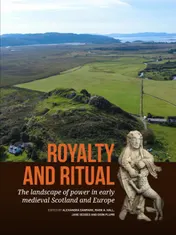
Royalty and Ritual
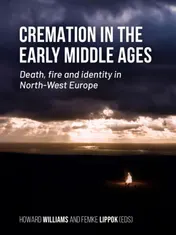
Cremation in the Early Middle Ages
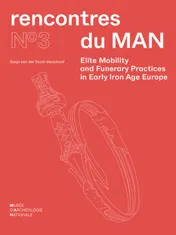
Elite Mobility and Funerary Practices in Early Iron Age Europe
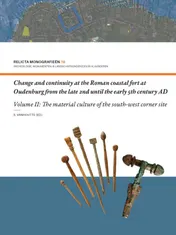
Change and continuity at the Roman coastal fort at Oudenburg from the late 2nd until the early 5th century AD
Settling with the norm?
Farmers’ trade and markets
Household goods in the European Medieval and Early Modern Countryside
NSTC 501631271 · CB-relatie 9180064 · Bijgewerkt 6 augustus 2026