
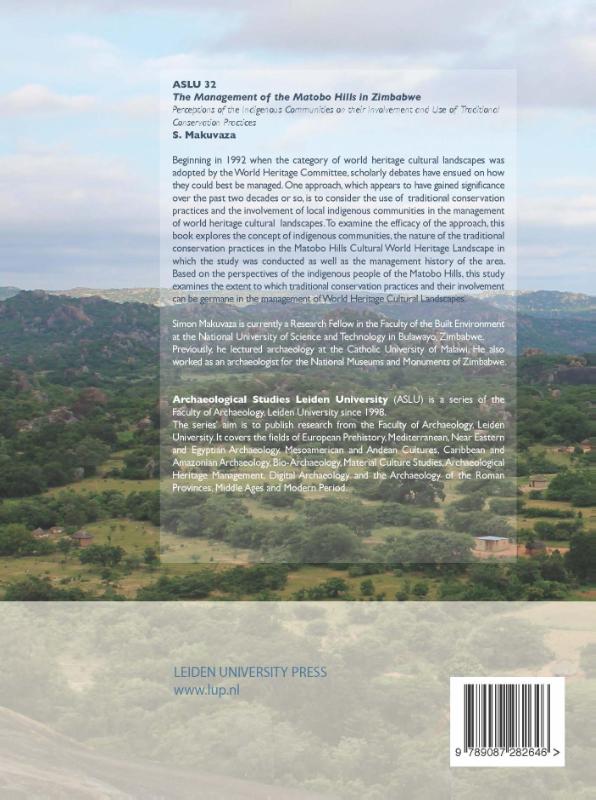
The Management of the Matobo Hills in Zimbabwe Perceptions of the indigenous communities on their involvement and use of traditional conservation practices
Since 1992, when the World Heritage Committee established its category of "cultural landscapes", scholarly debates have ensued on how they could best be managed. One approach, which appears to have gained significance over the past two decades or so, considers using traditional conservation practices as well as engaging local indigenous communities in the stewardship of these exemplary sites.
To examine the efficacy of this recent approach, this book explores the concept of indigenous communities, the nature of traditional conservancy in the Matobo Hills Cultural World Heritage Landscape where this study was conducted, as well as the management history of the area. Based on the perspectives of the indigenous people of the Matobo Hills, this investigation studies the extent to which both traditional conservation practices and local involvement can be germane to the administration of World Heritage Cultural Landscapes.
Simon Makuvaza is currently a Research Fellow in the Faculty of the Built Environment at the National University of Science and Technology in Bulawayo, Zimbabwe. Previously, he lectured archaeology at the Catholic University of Malawi. He also worked as an archaeologist for the National Museums and Monuments of Zimbabwe.
To examine the efficacy of this recent approach, this book explores the concept of indigenous communities, the nature of traditional conservancy in the Matobo Hills Cultural World Heritage Landscape where this study was conducted, as well as the management history of the area. Based on the perspectives of the indigenous people of the Matobo Hills, this investigation studies the extent to which both traditional conservation practices and local involvement can be germane to the administration of World Heritage Cultural Landscapes.
Simon Makuvaza is currently a Research Fellow in the Faculty of the Built Environment at the National University of Science and Technology in Bulawayo, Zimbabwe. Previously, he lectured archaeology at the Catholic University of Malawi. He also worked as an archaeologist for the National Museums and Monuments of Zimbabwe.
In het kort
ISBN-13
9789087282646
Uitgever
Verschenen
1 november 2016
Imprint
Bibliografisch
ISBN-139789087282646
SerieArchaeological studies Leiden University (ASLU) — deel 32
Editie1
TaalEngels eng
Pagina’s138
GeïllustreerdJa
Uitgave
UitgeverLeiden University Press
ImprintLeiden University Press
CB-relatie-id6345163
Verschenen1 november 2016
StatusOnbekend 00
BeschikbaarheidContact leverancier 99
Zonder prijsPrijs volgt
Vorm & inhoud
ProductvormPaperback BC
SamenstellingLos product
Classificatie
NUR (hoofd)Archeologie 682
NUR (alle)682 Archeologie
Medewerkers
Auteur A01Simon Makuvaza
Herkomst
Werk-id (NSTC)500385037
MeldingBevestigd bij publicatie 03
Laatste CB-bericht7766
Bijgewerkt5 augustus 2026
Lijkt op dit boek
Troubled Waters
Changes in the Cultural Landscape and their Impacts on Heritage Management
Living (World) Heritage Cities
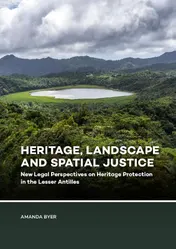
Heritage, Landscape and Spatial Justice
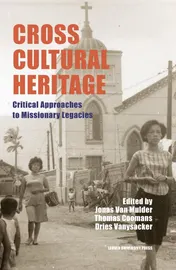
Cross-Cultural Heritage
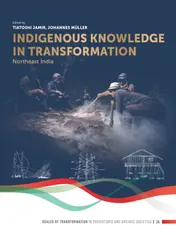
Indigenous Knowledge in Transformation
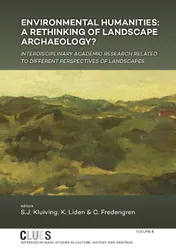
Environmental humanities: a rethinking of landscape archaeology?
A place of placelessness
LDE Heritage Conference on Heritage and the Sustainable Development Goals
Intent on the Paleolithic
NSTC 500385037 · CB-relatie 6345163 · Laatste CB-bericht 7766 · Bijgewerkt 5 augustus 2026